
By Hashir Hussain, The Rites of Salt
In a category rich in mythology, specificity can be a stronger retail proposition than another sweeping origin story
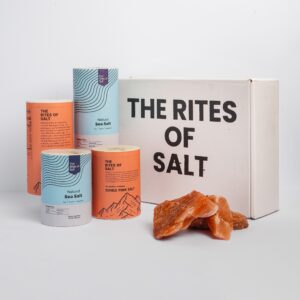 For years, “Himalayan” has done a remarkable amount of work on salt packaging. It sounds specific, evocative and reassuring. Yet from a retail point of view, it often tells the customer surprisingly little.
Two packs of pink salt can carry almost identical language while giving no clear indication of where the product was actually sourced, how precise the origin claim is, or what evidence sits behind statements about purity and composition. That gap between the romance of provenance and the reality of provenance is where we believe food brands now need to become more exact.
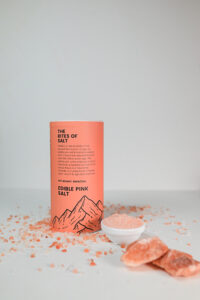 At The Rites of Salt, our pink salt is sourced from Kalabagh, Pakistan, within Pakistan’s Punjab Salt Range. We name Kalabagh deliberately. “Himalayan” is a useful category description, but it is not a receipt. If provenance is going to form part of a product’s value, the source should be specific enough for a retailer or customer to identify and question.
That principle shapes the rest of the brand. Our rule is simple: provocation in tone, precision in facts. Salt has attracted an extraordinary amount of mythology over the years, particularly around trace minerals, wellness and supposed health advantages. We do not believe a modern challenger brand needs to add to that noise.
Pink salt is still salt. Its colour reflects naturally occurring mineral variation, and composition can vary between samples. That makes independent testing useful, but it does not turn salt into a supplement. We commission testing and publish supporting evidence as reports clear. Where a report says “not detected”, we say “not detected”. We do not translate that into “zero”, and we do not use a laboratory report to imply benefits it was never designed to prove.
For retailers, this matters because provenance is becoming part of trust, not simply storytelling. An origin story can help a product stand out, but it becomes much more valuable when the story is precise enough to be checked. “Sourced from Pakistan” is one level of information. “Sourced from the Punjab Salt Range” is better. Naming the actual source is better still.
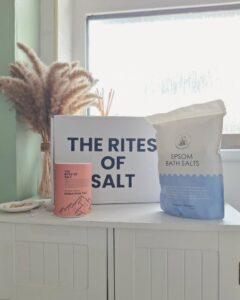
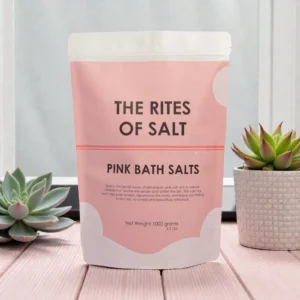 The same discipline applies beyond edible salt. Our Epsom Bath Salts, for example, are magnesium sulfate rather than sodium chloride. They may sit beside other bath salts on shelf, but chemically they are a different product. That distinction sounds obvious, yet categories are often marketed through mood and imagery before shoppers are told clearly what the product actually is. We would rather explain the substance first and leave the mythology out of it.
That is also why we resist the language of “miracle minerals”, detoxification and vague purity claims. Such phrases may create a quick marketing hook, but they become fragile as soon as customers start asking harder questions. A challenger brand should be able to survive those questions.
For us, the opportunity in salt is not to make the category more mystical. It is to make it more transparent, more considered and more culturally interesting. Packaging can have personality. The language can have attitude. But the evidence has to stay disciplined.
That is the standard we are trying to build The Rites of Salt around: provenance with a receipt, not provenance as theatre.
For retailers, that creates a different proposition. The product can still be visually distinctive and giftable, but the reason for stocking it should not end with how the canister looks on shelf. The stronger proposition is a brand with a clear point of view in a category that has too often relied on broad language, inherited assumptions and wellness shorthand.
As consumers become more curious about where products come from and what claims actually mean, we believe specificity will become a stronger form of premiumisation than mythology. The brands that earn trust will be those willing to say exactly what they know, show the evidence behind it, and be equally clear about what they do not claim.
In a category full of big stories, sometimes the strongest story is simply being precise.