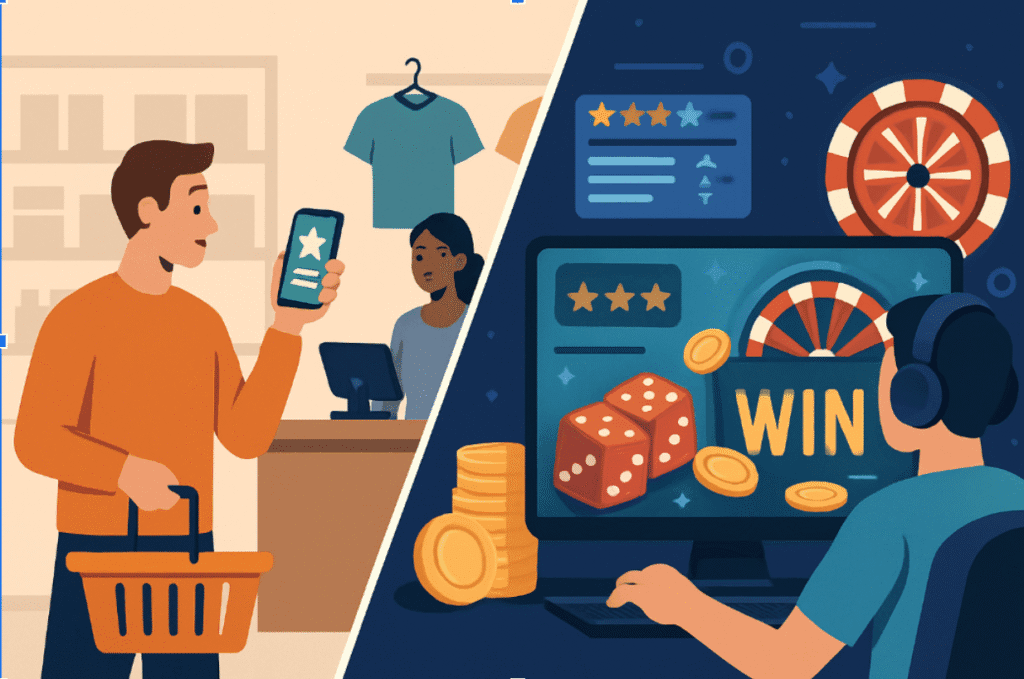
 The iGaming industry experts know a thing or two about marketing. They’ve managed to build one of the most successful markets online in just over two decades. These achievements can be attributed to clever marketing and a strong dedication to client satisfaction. There may be something that land-based shops can learn from online casinos considering customers are voicing their displeasure with physical retail more and more.
The retail industry has always been following the simple rule that “the customer is always right.” Many are now questioning the merits of such a rule. If the result is dissatisfied clients and overworked/frustrated employees, then we can safely say it is not such an effective concept. That is why we would like to examine the things that retailers can learn from the best casino sites on the world wide web. Let us explore what happens when physical stores meet iGaming.
Gamification
The concept of gamification did not originate in the iGaming market. It began with the success of video games, which many might have already guessed. That being said it was thanks to online casinos that gamification became such a massive hit among other industries. The concept is simply adopting traits and tropes that most would associate with video games, and applying them to different industries. Online casinos used leaderboards and loyalty programs to keep their fans engaged and interested.
Can land-based retailers do the same thing in order to elevate the customer experience? Many have already tried and been quite successful at it. Starbucks is a prominent example of a land-based shop using gamification tactics to keep fans coming back for more coffee. The “Starbucks Rewards” program affords stars to customers after each purchase. Once the client has accumulated enough stars they can redeem them for a free drink or something of the sort.
The gamification phenomenon has even hit the beauty industry. Anyone interested in makeup will have visited or at least heard of Sephora. Their “Beauty Insider” program is a tiered membership that provides benefits based on the amount of money that visitors have spent in the shop. The rewards range from free samples to early access of new material. The approach has been pretty effective in driving up interest in the latest Sephora products.
Alternative payment methods
The success of the online gambling industry can be attributed to a slew of different factors. Some have posited that the early embrace of alternative payment options is one such factor. Online casinos were allowing crypto-based deposits before Bitcoin ever became the talk of the town. Many people talk about BTC and LTC as money-making tools nowadays. However, Bitcoin mining is somewhat passé for many users. It is all about trading and actually using digital coins nowadays.
Internet platforms are a lot more likely to embrace crypto than land-based businesses. However, seeing these online markets being so successful has certainly inspired some shops to try their hand at crypto purchasing. Whole Foods is a supermarket chain known for their dedication to quality produce. In the past few years they’ve also become known for their willingness to accept Bitcoin-based payments. It isn’t just the well-known supermarket chain that has done this. Apple and Microsoft are also now willing to sell their electronic devices and software in exchange for some of the more legitimate cryptocurrencies.
Though many of the well-established businesses are operating on a crypto-basis, there are also those that have opposed this new direction. The shops that don’t want to use crypto have some good reasons. The most obvious one is Bitcoin’s volatility. The crypto market is well-known for being one of the most volatile trading markets in the world. Prices fluctuate daily and many are not willing to deal with the stress of it all.
Diverse approach to marketing
Any entrepreneur will tell you that marketing is the most important aspect of running a business. The goal is to make people aware of the product. Getting someone interested in a service is easy once they know it exists. Online casinos understand this concept. That is why many of them take an omnichannel approach to marketing. The phrase simply refers to the different platforms that online casinos use to advertise their products. One can find online casino ads on social media and even on billboards strewn along the road. Considering the success of the industry the strategy has proven quite effective.
Land-based retailers might learn a lot from the omnidirectional approach to marketing that online casinos have mastered. Brand awareness is key for already established shops like Starbucks or McDonalds. However, it is unlikely that people will ever be unaware of these shops even if it weren’t for their massive marketing budget. Small retail businesses might be the ones that need to learn from the iGaming sector. Advertising on social media is easier than ever. All one would have to do is start an Instagram dedicated to their business. The rest is only a matter of acquiring followers.
Another interesting thing that land-based shops can learn from the online gambling market is how to promote special offers and bonus rewards. Email marketing is an incredibly successful advertisement approach. Shops can get their customers to sign up for weekly or monthly notifications that would let them know about the best offers. We are all looking for discounts on the products that we enjoy nowadays. Keeping the customers informed is not only useful in getting them interested, but also keeping them loyal.
Concluding thoughts
The retail market stands to evolve with the times. The good news is that many are taking the steps necessary to adapt to new standards. There are still those that are lagging behind, which could result in a serious hit to their bottom line. That is why we can’t imagine a world in which the old-school land-based shops are not going to take the steps to evolve further. It is hard to imagine a world where most retailers are not going to be taking advantage of digital technology to market to a whole new audience.