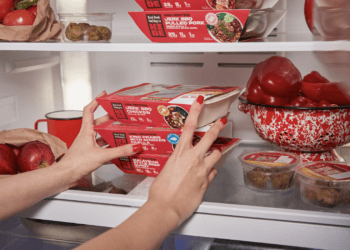
With 45% of British adults now following a specific diet (rising to 60% among Gen Z and younger millennials), a broader shift towards health and purpose-driven consumption is also reshaping menus and occasions according to the latest insights from Circana.
Despite the menu changes, one in four (23%) British consumers reports that they are switching dining venues due to a lack of suitable options for the growing preference for high-protein and low-calorie diets.
Functional food and beverages – those supporting energy, immunity, and weight management – are among the fastest-growing segments of demand, influencing both menu design and venue choice.
While GLP-1 adoption remains limited in Britain due to regulation, Circana revealed that momentum is building – awareness of GLP-1 medications has risen from 69% in May 2025 to 75% in January 2026.
Restaurants are starting to adapt with portion controlled, protein-forward menus and lower-sugar offerings. However, there is potential for more innovation as social media accelerates awareness and behaviour change, expanding them to more and more users.
Circana’s Edurne Uranga, VP Foodservice Europe, said: “Price, loyalty and function are no longer decisive factors for British consumers, who are increasingly motivated by the eating/drinking out experience. They are seeking variety, healthier options, and the excitement of discovering new places and formats. This is where growth is being unlocked.”
While Europeans visit foodservice outlets less often than Americans, the role of those foodservice outlets in European household spending is often greater. In Spain, foodservice outlets account for 9.9% of total spend, followed by Great Britain (7.1%), Germany (6.8%) and Italy (5.9%), compared to 5.1% in the U.S., highlighting their continued importance in the European consumer wallet.
Despite economic headwinds, demand for foodservice remains resilient across British consumers who made 127 visits per capita in 2025, down -1.4%, equating to 8.8bn visits to British restaurants. The British foodservice industry is now valued at £71bn – up +3.6% on 2024 figures.
Structural shifts reshape British foodservice industry
Behind stable topline demand in the foodservice category, the sector is undergoing significant structural change, shaped by demographic shifts, post-pandemic behaviours, economic pressures and ongoing innovation.
“Commercial restaurants now account for 77% of visits in Europe and 85% in Great Britain. At the same time, retail foodservice continues to gain traction in Europe, now representing 6% of visits (+3.5%), while in Great Britain it accounts for a more established 10% share (-4.0%), highlighting a more mature market despite a year-on-year dip and further blurring the lines between retail and hospitality.”
The road ahead
Circana predicted growth in restaurant revenue in 2026 of +3% across Europe and 4% in Great Britain, signalling steady but increasingly competitive expansion.
“As foodservice continues to evolve, restaurants and brands must rethink how they deliver value in a much broader sense so that every Pound spent feels worth it for consumers,” adds Uranga. “At the same time, the sector should look at how revamping menus will help tap into new consumption patterns in a way that feels locally relevant for the consumption occasion and channel. Those who can strike that balance will be best positioned to win in the next phase of foodservice growth.”
Other trends driving change in foodservice across Europe (compared to the US) were identified as:
- The liquid revolution – In Europe, just 14% of foodservice visits are beverage-only (9% in Great Britain) compared with the surge of growth (45%) being experienced in the US. Nevertheless, beverage-only visits are rising steadily in Europe and the UK as operators invest in premium coffee, functional drinks, and low/no-alcohol options. Emerging categories such as modern sodas and functional beverages are expected to accelerate growth.
- The anytime consumption era – In Europe, dinner remains the primary growth driver (traffic +1%), while in the U.S., breakfast leads growth (+3%), reflecting more flexible consumption habits. In Great Britain, only snacking visits are currently experiencing growth (+0.9% from 2.61bn in 2024 to 2.64bn in 2025).
- A transatlantic wave of restaurant chains – Europe is emerging as a major growth opportunity for international chains, with nearly half of the top 40 U.S. brands yet to enter the market. Expansion from players such as Chick-fil-A, Wendy’s, Panda Express, Wingstop, and Little Caesars is expected to intensify competition, raising the bar on value, convenience, and brand consistency.