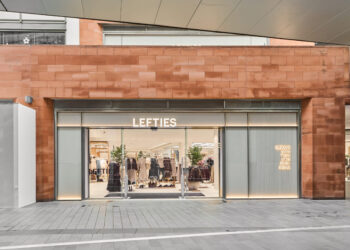

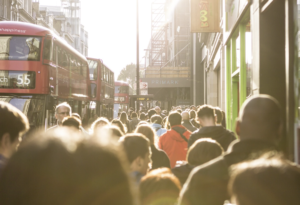
 Once upon a time, the great British High Street was king. Online shopping? That was the alternative. Consumers would check out the wares and stock of a high street store first, then head to its website to order any unavailable or elusive items.
Six years ago, the pandemic upended that hierarchy. Shops closed, and eCommerce became essential. Yet, the reopening of the high street did little to restore the old order. If anything, consecutive lockdowns accelerated a behavioural shift that was already well underway.
As a result, modern consumers aren’t just living through the rise of digital retail, but are existing in a new ecosystem in which digital is the default environment for much of everyday life. So, how did we get here?
A pandemic spike became a permanent shift
There’s plenty of figures to bear this out. For instance, according to the Office for National Statistics, internet sales accounted for just 7.1% of British retail in 2010. That share reached 21.6% by 2019, then surged to 37.8% in 2021. Crucially, high street spending never returned to its pre-pandemic level, with online sales still representing 27.4% of all retail spending to date.
Meanwhile, BRC-Sensormatic data shows that UK footfall fell by another 0.8% in 2025, marking its third consecutive annual decline. Shopping centres were hit particularly hard during December, when visitor numbers dropped by 5.1% year on year.
That impact can be felt. Fashion retailers and department stores haven’t just had to contend with reduced footfall: return rates are higher than ever, while shoppers can now compare dozens of competitively priced alternatives before entering a fitting room. Conversely, ecommerce logistics, food delivery, streaming subscriptions and app-based leisure have expanded around consumers who now expect services to come to them.
Convenience is just the beginning
The obvious advantage of a digital platform is that it never closes. A shopper can simply replace that broken kettle during their commute or order groceries at midnight. But convenience alone doesn’t explain why Britons continue to remain online long after the purchase has been made…
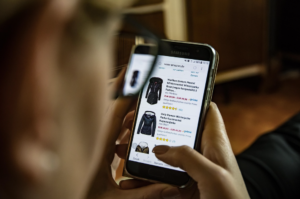 Digital platforms condense several stages of the buying journey into one place. Discovery, price comparison, payment and customer feedback can all happen within a matter of minutes. The shift echoes well beyond eCommerce and stretches into how consumers choose to occupy their downtime.
Cinemas have a limited number of screens, but Netflix is content on demand. A local casino’s game offering is limited by floor space, but a comparison site means customers can compare licensed UK operators to read up on games, bonuses or payment options before choosing where to wager. In each case, digital platforms expand choice by removing many of the physical limitations that shape traditional leisure activities.
These advantages are felt by businesses and consumers alike. Digital access has allowed shopping and leisure to occupy moments that were previously commercially inactive, offering greater choice while removing the barriers of distance and fixed trading hours. Even when something is out of stock, an alternative is typically just another tab away.
Social media’s rewritten the customer journey
There’s also a real era-specific reason why the high street’s losing out to the online realm. Social media is ubiquitous, precisely because digital platforms are where culture now happens.
Say a shopper encounters a skincare product in a TikTok tutorial; they can read feedback instantly and even complete the purchase without leaving the app. It’s not about “going shopping” anymore. Inspiration and transaction have begun to merge.
Algorithms then make this environment feel tailored and personal. A shop presents the same displays to everyone who enters on a given day, but social media feeds re-organise themselves around each user. The feed feels relevant, immediate…it’s almost like the right product has found the consumer, rather than the other way around.
Physical retail still has a card up its sleeve
What does all this mean for the future of the high street in the UK? An obvious answer is that eCommerce businesses will continue to dominate, outlasting physical and even hybrid retailers. That’s not necessarily the case.
In-store shopping can be immediate in different ways to shopping on a smartphone screen. Why? Because it’s full of qualities that are simply impossible to reproduce through a tech device. Expertise, the tactile nature of browsing and selecting products, human interaction, they all add up to create a distinct experience.
What’s crucial is that retail businesses start to capitalise on this. Future-proofing a business isn’t simply about digitising everything. It involves identifying which parts of the customer journey benefit from being faster, broader or more personalised online, and which are more valuable in person.
Consumers are spending more time on digital platforms because those platforms have absorbed shopping and leisure behaviours into the wider rhythm of daily life, not because brick-and-mortar experiences don’t matter any more. The retailers who’ll hold their attention are the ones giving reasons to use both.