
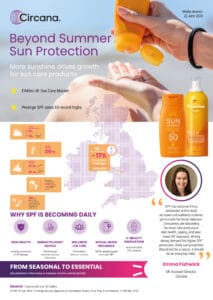
 New data from Circana shows the UK sun care market continues to grow strongly as consumers increasingly prioritise SPF and skin protection. Wider retail sales across all UK outlets, including chemists and health & beauty retailers, reached £444.9 million in the 52 weeks to 25 April 2026, up +10% year-on-year and +17% compared with two years earlier.
The growth comes as UK sunshine hours rose +11% year-on-year and +13% above the long-term average, helping drive demand for sun care products across the country.
As the UK experienced its hottest May day on record last month, with temperatures exceeding 35°C, Circana’s latest analysis comes amid growing political and public health focus on UV safety. The research follows the launch earlier this month of a major new report from the All-Party Parliamentary Group for Beauty, Hair and Wellbeing calling for stronger national action on UV protection and skin cancer prevention.
The report, A Preventable Crisis: The Case for a National UV Safety Strategy, is the result of a year-long inquiry and calls for a coordinated national approach to UV protection and skin cancer prevention as cases continue to rise across the UK.
Prestige sun care sales soar
Demand for face SPF is higher than ever, with prestige suncare sales recently reaching record levels in the UK.
Circana’s latest prestige beauty data from leading department stores, beauty specialists and e-commerce retailers across the UK and Europe, shows strong growth in the UK suncare market between January and December 2025 compared with the same period in 2024. In the 12 months to December 2025, prestige suncare sales rose 31.4% year-on-year, with unit sales growing even faster at 37.4%.
Consumers are increasingly treating sun protection as an everyday skincare essential rather than a seasonal holiday purchase. While seasonality remains important, with nearly half of prestige UK suncare sales during 2024 and 2025 occurring between May and August, year-round demand is growing rapidly. Prestige SPF sales increased by more than 40% year-on-year between September and December 2025 despite colder weather conditions.
This marks a significant acceleration compared with the previous year, when unit sales grew by just 6.3% between January and December 2024.
Importantly, growth was driven by rising consumer demand rather than higher pricing. The average selling price declined by -4.4% in the 12 months to December 2025, to £18.70, suggesting shoppers are increasingly seeking affordable SPF options and that brands are competing on accessibility and value.
Emma Fishwick, UK account director at Circana, said: “SPF is no longer viewed by consumers as something reserved for holidays or periods of sunny weather. It has become firmly embedded within daily skincare and wellness routines, particularly for facial skincare.
“Consumers are becoming far more educated about skin health, ageing, and year-round UV exposure, driving strong demand for higher SPF protection and multifunctional skincare formats. However, there is still much work to be done.
“What is particularly interesting is that growth is not only happening at the premium end of the market. Consumers are actively seeking products that balance efficacy, skincare benefits, and affordability, creating significant opportunities for both prestige and accessible brands.
“Daily sun protection should not be a luxury; it should be an everyday habit, and price should never be a deterrent to protecting skin health and preventing future damage.”
SPF 50 and skincare-led formats drive prestige sun care growth
The strongest growth in prestige suncare is coming from face SPF products, with consumers increasingly prioritising higher-protection formats. SPF 50 products recorded sales growth of 42.5% year-on-year and now account for 80% of the prestige face SPF market in 2025, up from 70% two years ago. SPF 30 lines have declined.
Lightweight, skincare-led SPF formats are seeing particularly strong momentum, with serum SPF products growing 102% year-on-year and milk-based formats up 203%.
Demand for prestige mineral suncare marketed as reef-safe continues to grow as consumers become more environmentally conscious, however, while these products outperformed chemical formulas in 2024, Circana’s 2025 figures show chemical-filter suncare is regaining momentum. Sales of chemical formula suncare have risen 44% year-on-year compared with 23% growth for mineral products, reflecting continued consumer preference for lighter, more cosmetically appealing formulations.
Fishwick concluded: “The prestige suncare category is rapidly evolving and the evolution of SPF is far from over, with brands and retailers continuing to reposition sun protection around skincare performance, prevention, and daily wellness rather than purely seasonal sun exposure. Future growth is expected to focus on hybrid skincare innovation, inclusive skin solutions, and formats designed to support daily use and consumers’ on-the-go lifestyles.”