People who started taking GLP-1s this year are planning to stick with their medication rather than take a break to indulge this Christmas, according to a new study commissioned by sensory and product specialists MMR Research and undertaken by Toluna.
Three-quarters of people who began taking GLP-1 medication this year (75%) expect to continue taking the same or even a higher dose of weight-loss medications over the festive period. It seems many are looking forward to the gift of control, with three in five users (60%) anticipating enjoying Christmas overall more than they did in 2025, while 54% say they’re likely to find festive food more enjoyable.
Andrew Wardlaw, chief ideas officer at MMR Research, comments: “Christmas is probably going to look and feel quite different to previous years for many people who started their GLP-1 journey in 2026. While you might expect that to bring a sense of trepidation, our study suggests that people are actually relishing the control they have over their cravings, even if that might cause awkward moments at the Christmas dinner table. In fact, rather than viewing staying on track as a barrier to joy, it seems many find their newfound sense of restraint to be a source of even greater pleasure.”
That mindset shift is set to show up in people’s Christmas trolleys, with less but better the order of the day for 84% of users. One in two intend to buy less food overall this Christmas than in 2025, while over half (53%) say they’ll buy smaller packs or portions. 47 per cent expect to cut the amount of alcohol they drink, although nearly half of people (49%) expect to choose more premium or luxury food and drink this year which could create an opportunity for manufacturers as they enter their most important trading period of the year.
Andrew Wardlaw expands: “This isn’t a cue simply to resize festive favourites. Instead, it’s about manufacturers giving more selective shoppers a reason to choose them. There’s still an appetite for festive treats, and some brands will already be well positioned to earn their place in the Christmas shop, but businesses really need to understand what ‘better’ means in their category now. That’s often about tapping into the emotional rewards that make a product feel right for the occasion, rather than aimlessly chasing trends or launching a range of high protein mince pies.”
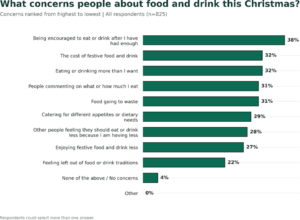
Previous research from MMR found that 77% of GLP-1 users reported the medication changing how they experience products, including putting them off some flavours and textures that can be deemed too intense or overwhelming. Andrew Wardlaw continues: “These consumers increasingly want experiences that are predictable, tolerable and therefore repeatable. For alcohol brands, for example, that will require careful evaluation of how sweet, bitter or even carbonated their products are.”Being encouraged to eat or drink after they’ve had enough tops the list of concerns for weight loss drug users, while ‘feeling left out of food or drink traditions’ and ‘enjoying festive food and drink less’ are lower down the pecking order.
 Andrew Wardlaw concludes: “Christmas is a reckoning point for the food and beverage sector. These consumers are not putting their new habits on hold for the festive season, nor are they especially worried about missing out. They want to enjoy Christmas on their own terms.
“For manufacturers, that means adapting to a different idea of indulgence, rather than waiting for old behaviours to return. As this group of consumers grows, brands need to work out quickly what makes their products worth choosing, whether that is exceptional taste or texture, meaningful nutrition or the emotional reward of a favourite ritual. Smaller portions and added protein are only part of the answer. The brands that get this right will give people a reason to keep choosing them long after the decorations come down.”