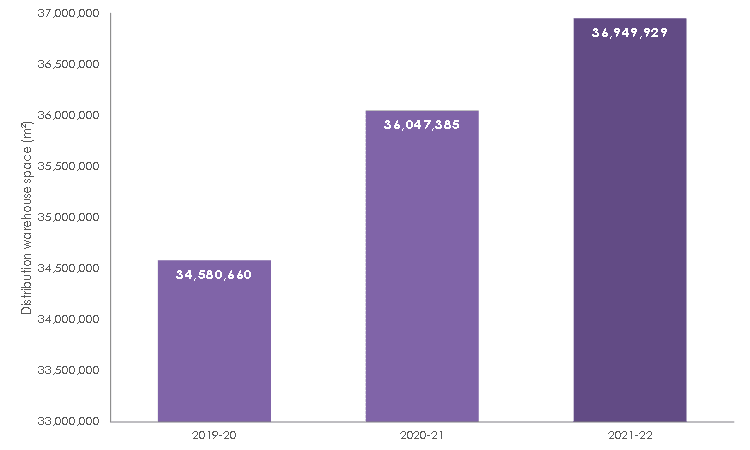

An extra 900,000 square metres in large distribution warehouses was added in 2022, bringing the total space dedicated to these centres to 36.95 million square metres, according to new data from international law firm RPC.
Arash Rajai, construction and engineering partner working with the firm’s retail group, says the increase in warehouse space has come as e-commerce sales reached a record high of £29.8 billion in 2022, and store footfall increasing (10.4% growth last month compared to February 2022). As a result, e-commerce retailers and logistics companies have increased their investment in distribution warehouses to meet demand.
Arash Rajai suggests that although the volume in overall warehouse stock may slow after a period of rapid growth, construction activity will remain high as businesses replace or renovate older warehouses to meet ESG requirements. For example, it could help companies to hit Net Zero targets by lowering carbon emissions of their, or their supply chain’s warehouses and improve the working environment.
Location, location, location
Location is also important in achieving ESG objectives. Companies are siting warehouses closer to primary consumer locations, to reduce transport emissions, rather than focusing on cost-effective sites.
In logistics, operators are looking to move distribution centres closer to customers to improve delivery times and “green” the number of road miles that goods travel.
Rajai, says: “Record sales from e-commerce and omnichannel retailers have led to a rush amongst retailers to increase distribution warehouse space. Even if consumer spending were to cool, the need for greener warehouses and digitising the supply chain means that the rate of new construction projects is likely to remain strong in the long term.
“Recent disruption across supply chains has encouraged retailers to rethink their logistics networks. Building warehouses closer to customers has afforded retailers greater control over inventory.”