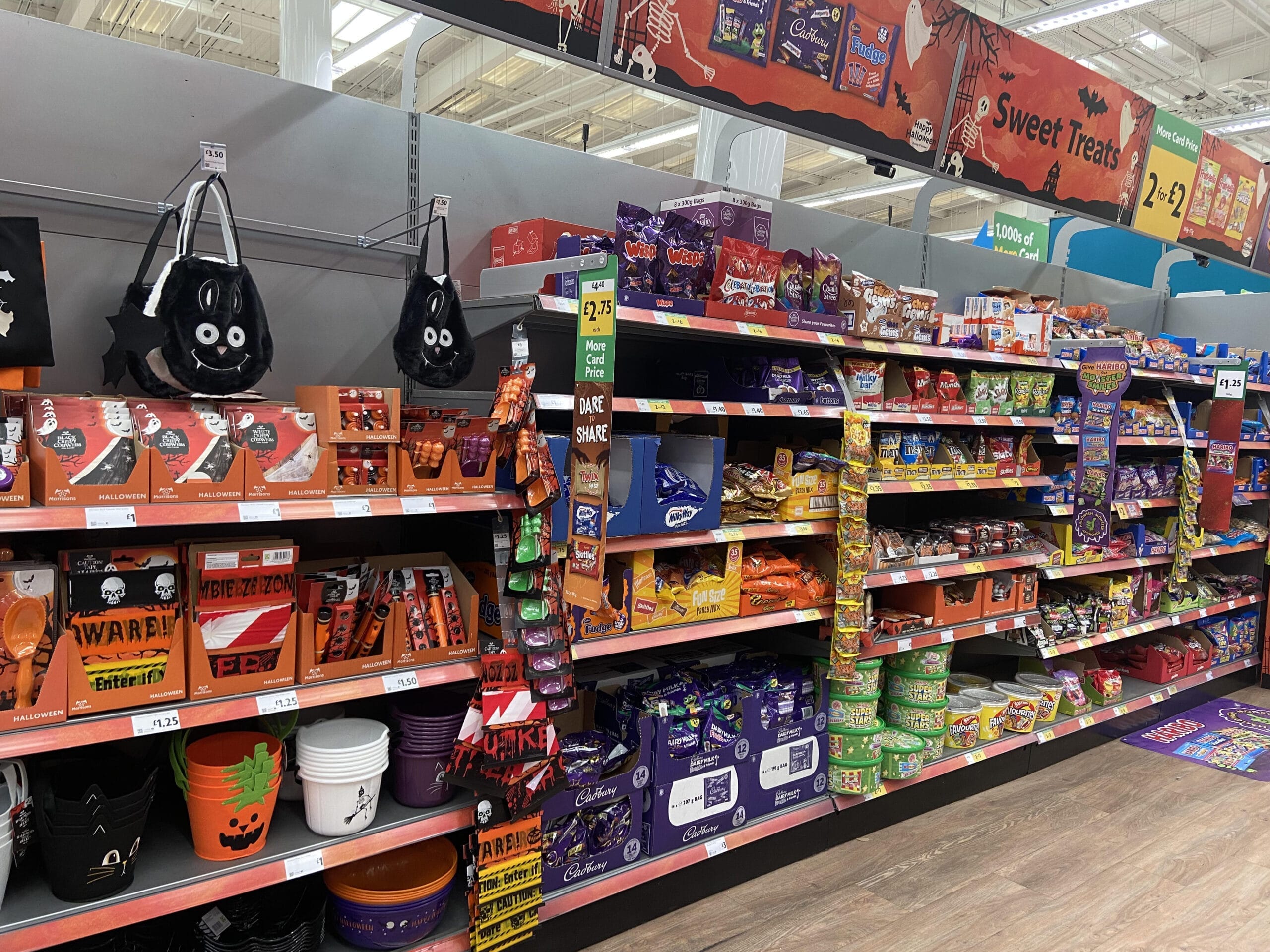
 Despite the ongoing growth in the popularity of Halloween among shoppers, brands and retailers continue to miss taking full advantage of the day’s potential through sub-optimal execution, disappointed shoppers and under-performing P&Ls.
But, according to Sellex, with Halloween topping £1bn in sales for the first time in 2023 (source: Mintel), the richness of real-time data means it does not have to be this way.
“Brands and retailers will already have locked in fantastic plans with their customers for this Halloween,” explains Sellex Managing Director, Anthony Carr, “but already, some stores will be suffering from poor availability and poor execution, on which competitors may be capitalising. Retailer systems will re-calibrate based on a false flag of the potential the stores can deliver. This is based on subdued sales through poor availability in recent days, and the opportunity is already being lost in so many stores. This is completely avoidable – it doesn’t have to be this way.”
Because through Data Confidence in Customer Development, Carr says, there are ways to get Halloween spot-on for 2024:
“Brands should start tracking store-level sales and inventory performance today. it’s all well-and-good looking at yesterday’s performance and seeking to fix issues, but if you look at stores which commonly under-trade on your range, the chances are you will have the same problem again and again. This means you can predict it and act to fix it once and for all.”
Brands should also consider using field sales resources more sparingly.
“Crowd-sourced resources are often much more cost effective than dedicated or permanent field sales resource and yet can impact in much the same way if your data points them to the right action,” continues Carr. “They only need to visit stores not working, not those delivering what you need.”
Other questions that he suggests brands ask are whether stores delivering retail media solutions are delivering an ROI versus those “control stores”.
Brands should be looking at EPOS data as well as loyalty impacts. He also asks how quickly teams are looking at retailer loyalty data to ensure that your activity is resonating with who the brand wants it to, because the sooner you know, the sooner you can consider course-correction.
“We strongly recommend monitoring store inventory in the days ahead of the promotional go-live,” he continues. “Measure the ROI forensically, capture learnings for post-evaluation, and be ready to talk openly with retail partners about what worked and didn’t work for the category and brand.”
“In addition, make sure you are working cross functionally to ensure that the “vision of success” is delivered. This might all sound like common sense, but you would be amazed at the number of businesses who still don’t do it effectively.”
Carr says brands should ensure that insights are surfaced from essential datasets and discussed at every meeting which makes up their monthly Sales and Operating Process (S&OP) cycle.
“What can you learn from Halloween that might help you to perform better at Christmas? Knowing the problem and the opportunity stores now will help you so much in eight weeks’ time!”
“Ultimately, though, how wholistically are your commercial leadership team thinking about Halloween? How often are they coming together to review real-time data? How much are they bridging the gap between their respective disciplines? This is so often where it falls, and value is being lost.”
Many organisations assist FMCG manufacturers with enhanced S&OP processes, but, concludes Carr, very few understand the opportunity to fully utilise data in real time to optimise sales, or forensically post-evaluate.
“They have no understanding of how Field Sales and Retail Execution works, in preventing out of stocks and in the most cost-effective way.”