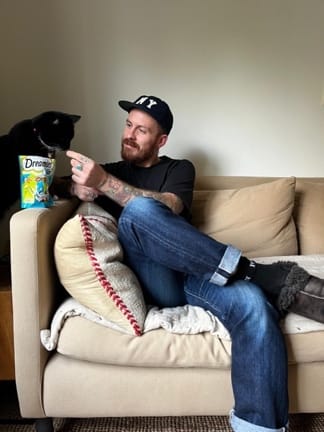
 The UK is witnessing a cultural shift in cat ownership. New research from Mars, Incorporated – the company behind pet nutrition brands like WHISKAS®, SHEBA® and DREAMIES™ – has found that cat ownership is now becoming more evenly split between male and female owners (Cats Protection’s 2025 Cat Report). Long associated with the “Cat Lady” stereotype, cat ownership is now shifting with nearly half (47%) of male cat owners embracing the Cat Dad label as a badge of honour.
And this shift is having a surprising impact on modern dating too. As the UK enters “cuffing season” – the colder months when people typically seek emotional connection and romantic partners – the research shows that Cat Dads are climbing the dating wish list.
Younger generations are particularly drawn to Cat Dads, with two in five Gen Z (41%) and Millennials (40%) declaring men who own cats are more attractive – and almost as many (39%) saying men look more attractive when they include their cat in dating profile photos.
Across the wider population, nearly half (45%) of Brits view cat ownership as a positive personality trait, and three in 10 (30%) consider “Cat Dad” a dating green flag. Cat Dads themselves agree the effect is real, with over a third (36%) of male cat owners navigating the dating scene saying having a cat has improved their dating life.
Hala Sinno, brand director and CFO (Chief Feline Officer) for the DREAMIES™ brand at Mars, said: “Cat Dads are enjoying a well-deserved moment in the spotlight, and we absolutely love seeing it unfold. From providing a little extra charm in the dating world to boosting wellbeing, life is simply more fun with a cat – something we know all too well on the DREAMIES™ team.”
Pet-ownership makes more room for empathy, emotional expression, and nurturing. These attitudes are also reflected in a wider cultural recognition of Cat Dads as emotionally attuned partners. Brits most commonly describe male cat owners as caring (37%), responsible (31%), sensitive (23%), and emotionally intelligent (17%). A third (32%) believe they make more empathetic partners – reinforcing why the term Cat Dad is increasingly seen as a modern green flag.
How cat ownership is influencing dating
But when they’re not turning heads on dating apps, Cat Dads love a little downtime. Over half of Cat Dads (53%) admit they often prefer spending time with their cat over other people. In fact, four in 10 (40%) Cat Dads say they choose a night at home with their cat over a social outing.
As Mars celebrates 90 years in the pet care industry, the company has been deepening its understanding of the human–animal bond.
Dr Scott McGrane, senior research manager leading the Sensory Science team at Mars, Incorporated’s Waltham Petcare Science Institute, and fellow Cat Dad said: “Our latest global pets and wellbeing research shows just how much comfort people find in their pets. In the UK, 67% of pet owners turn to their pet for support before anyone else when they’re stressed, and 78% of men with cats say their feline companion helps them quiet their minds and stop overthinking. It’s clear that the human–animal bond is deepening – evolving into relationships defined by emotional support, connection, and care. Cat Dads are a wonderful example of this shift. As a proud “Cat Dad” myself, I’m delighted to see these relationships celebrated.”
The rise of the Cat Dad shows how quickly the pet–parent bond is evolving, and it’s a space Mars has helped shape for generations. From humble beginnings in 1935 with the acquisition of UK-based Chappell Brothers, the maker of Chappie canned dog food, Mars has grown into one of the world’s most trusted names in pet care. Throughout the 1950s and ’60s, the company expanded its pet offerings with brands such as PEDIGREE®, WHISKAS®, SHEBA® while establishing the pioneering Waltham Petcare Science Institute.