

GLP-1s could transform the way food and drink manufacturers approach flavour and texture innovation as three in four (77%) users say the medication has changed how they experience products, including putting them off some flavours and textures. That’s according to a new study from MMR Research, the sensory and product testing experts.
The research comes as the first GLP-1 tablets have become available to purchase in the UK, which could lead to broader uptake. 92% of GLP-1 considerers say they would be more likely to try the drugs if they had fewer side effects or were more accessible and affordable. While the sensory disruption caused by GLP-1s remains relatively contained for now, it may become a much bigger headache for manufacturers as these barriers to adoption are removed.
MMR surveyed 974 UK consumers who were either actively using, had previously used or were considering GLP-1 medication. They found that nearly one third (29%) of current users reported changes in the taste of food. 30% of these people had an aversion to very fatty foods, and 29% to foods that were very sugary. In fact, 45% of people who experienced taste differences said that sweetness became more intense.* One in five (20%) had a desire to avoid certain textures.
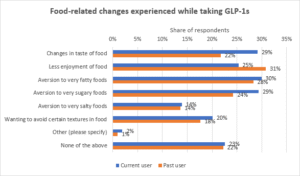 With more people trying GLP-1 medication, manufacturers will need to recalibrate their products to protect customers from sensory overload without alienating the mainstream, says Andrew Wardlaw, chief ideas officer at MMR Research: “For decades, big flavours and bold textures have been seen as the winning formula when it comes to food. But for GLP-1 users, stronger flavours can be unpleasantly overwhelming. To connect with them, brands might need to offer product experiences that feel balanced, controlled and easy to return to, or in other words, make them simpler, smaller and plainer. The risk of course is that this could turn off people who aren’t taking the drugs.
“Rather than trying to find a Goldilocks compromise which satisfies no one fully, brands will probably need to think about more precise, targeted product development across their ranges.”
Almost two thirds (63%) of current users say their cravings have reduced, with implications for how products are chosen. Wardlaw continues: “What we’re potentially looking at here is the beginning of the end of craving, and so the drive to eat or drink something because it provides instant satisfaction will become far less important to consumers. In this next era, we will see people making more intentional choices, and it will be up to manufacturers to ensure their products are ‘worth it’ in terms of supporting nutritional or lifestyle goals.”
Wardlaw also argues that brands may need to invest more heavily in products’ potential to deliver deeper emotional rewards. The challenge is not simply to make things taste good, but to cater to these wider needs.
Wardlaw explains: “Managing hunger, cravings and food noise is becoming the new norm, not just for GLP-1 users, but for everyone. People are increasingly judging their choices against a new default: smaller portions, more intentional eating and less reliance on instant sensory reward. Consumers may gain more control, but they can also lose some of the pleasure food and drink provides. The brands that succeed will be the ones that understand this trade-off, finding ways to give some of that back, in smaller, smarter ways.”