
 Following today’s release of Marks & Spencer’s figures for the six months ending 27 September 2025; Eleanor Simpson- Gould, senior retail analyst at GlobalData, a leading data and analytics company, offers her view: “Marks & Spencer has emerged from the impact of its cyber attack with a credible path to recovery. Group revenue rose 22.1% in H1 to £8.0bn, driven by a £1.5m contribution from the consolidation of Ocado Retail. Without Ocado’s contribution, group sales would have been broadly flat year-on-year, a reasonable outcome given the scale of the cyber incident and an indicator of the resilience of Marks & Spencer. Earlier in the year, Marks & Spencer warned of a potential £300m hit to its full-year profits due to the cyber attack. Indeed, the extent of the attack has been a 45.7% decline in group operating profit before adjusting items. This decrease is primarily attributed to one-off incident-related costs and temporary online disruption. Heading into the second half of the year, Marks & Spencer must restore operating margins. The retailer must focus on highlighting its brand collaborations with Bella Freud and 16Arlington to boost full-price sales and offset further promotional activity during the golden quarter.
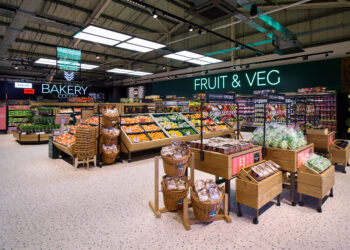
“Marks & Spencer’s food division is the saving grace in what has been a turbulent start to the year. Food sales rose 7.8% to £4.5bn in H1, driven by value-led ranges and viral hero SKUs, such as the hybrid Victoria sponge sandwich, which demonstrated its ability to create innovative on-trend products, helping bolster footfall and social media reach. The retailer’s unique own-brand food proposition has protected it from significant losses during the cyber incident. 57.1% of UK consumers who spent more at Marks & Spencer during the incident stated they had a specific product that could only be purchased from the retailer*. Though Marks & Spencer’s food division has been its most robust, the cyber attack caused elevated markdown and wastage costs, which have temporarily dented margins from 5.1% to 2.0%. Into the second half, Marks & Spencer will benefit from organic recovery in margin growth, bolstered by sales during the Christmas period, and though cautious about consumer sentiment, the retailer has proven the strength of its food business can endure, and we expect Q3 sales will be ahead of the UK food & grocery market.
“Within Marks & Spencer’s fashion, home & beauty segment, the full impact of the cyber incident is clear. Sales fell 16.4% during the half, with online taking the brunt of the loss, down 42.9% during the reporting period. Unlike its food division, Marks & Spencer’s fashion, home & beauty categories were less resilient to switching, as consumers reported poor stock availability instore for items they wanted and preferred not to visit stores during the website outage. During this period, Next’s similar online proposition and wide array of brands were an appealing substitute for clothing & footwear purchases. Consequently, 13% of UK consumers switched to Next during this period*. In the aftermath of the cyber attack, frequent discounts of 20% off through its Sparks loyalty scheme will have enticed lapsed shoppers back. However, Marks & Spencer should adopt more targeted and time-sensitive promotions, utilising specific clearance strategies to optimise the sale of remaining seasonal stock, to support profit margins. They must also shift from broad discounting to personalised, loyalty-based offers, to encourage impulse purchases and self-gifting as we head into the festive season.”