
Retail Times — UK Retail News
NFU Mutual
ADVERTISEMENT
  • HOME
  • ABOUT
    • CONTACT & Press release submit page
    • ADVERTISING
  • PRODUCTS
  • TECH
  • DATA
    • Reports
    • Research
  • RETAILER
    • Manufacturer
    • Wholesaler
  • PEOPLE
  • SUSTAINABILITY
    • Fairtrade
    • Packaging
  • SERVICES
    • Events
    • Awards
    • Logistics
  • COMMENT
    • In My Opinion
    • Featured Article
    • Why It Works
  • RETAIL CATEGORIES
No Result
View All Result
Retail Times — UK Retail News
No Result
View All Result
  • HOME
  • ABOUT
    • CONTACT & Press release submit page
    • ADVERTISING
  • PRODUCTS
  • TECH
  • DATA
    • Reports
    • Research
  • RETAILER
    • Manufacturer
    • Wholesaler
  • PEOPLE
  • SUSTAINABILITY
    • Fairtrade
    • Packaging
  • SERVICES
    • Events
    • Awards
    • Logistics
  • COMMENT
    • In My Opinion
    • Featured Article
    • Why It Works
  • RETAIL CATEGORIES
Retail Times — UK Retail News
No Result
View All Result
Home Retail News Data

New report: consumers are buying less – but spending more

by Fiona Briggs
August 21, 2026
in Data
Reading Time: 2 mins read

US consumers are spending more money than they did in 2025, but not in the way retailers expected. They’re making significantly fewer purchases and doing far more research before committing to purchases. The shift reflects inflation-driven price pressures – but pricing alone doesn’t explain it. Online prices rose just 2%-3% over the same period according to Adobe Digital Insights, a fraction of the 13% YoY jump in what shoppers actually paid per item. The rest points to shoppers trading up to pricier products, not just paying more for the same ones.

According to impact.com‘s 2026 Mid-year Industry Benchmark report, analyzing 2,319 same-store retail brands in the first half of 2026, transactions declined 7% year-over-year while average order value (AOV) jumped 16%, from $111 to $130. Despite fewer sales, consumer spending increased 8% YoY, driven mostly by higher per-item prices (up 13% YoY) rather than bigger baskets (+3% YoY).

The data reveal two overlapping trends. Click volume increased 6% YoY while conversion rates dropped 12% YoY, signaling that shoppers are taking longer to decide, comparing options, and only buying when confident. This is a fundamental shift from volume-driven purchasing to value-driven selection.

KEY TAKEAWAYS INCLUDE:

  • Partner dynamics and brand response: Loyalty and Rewards partners are thriving, increasing their contribution to consumer spending from 51% to 54% and remaining the largest partner contributor. Technology Solutions partners also grew (+15% YoY in transaction volume), proving that lower-funnel, high-intent channels win when shoppers are cautious. Voucher and Coupon partners lost ground, dropping from 11% to 5% of consumer spending. The shift signals that partner roles are specializing by funnel stage. Brands are responding by rewarding partners who convert: total brand spending grew 10% year-over-year, outpacing consumer spending growth of 8% YoY. They’re shifting away from fixed-cost models (down 19% YoY) and doubling down on performance-based commissions (up 14% YoY), now representing 90% of total brand spend.

  • Trading up vs. trading down: Categories are splitting into two distinct consumer behaviors. Computers & Electronics surged 38% YoY in consumer spending through volume—46% more transactions despite AOV dropping 6%. In contrast, Apparel, Shoes & Accessories saw a 17% AOV increase, offset by an 11% transaction decline, showing consumers buying less often but choosing pricier options. Arts & Entertainment also exceeded the 8% consumer spending growth benchmark through trading-down behavior. The brand implication: one partner strategy doesn’t fit both. Trading-up categories need partners focused on premium positioning; trading-down categories need partners optimized for volume and value messaging.

impact.com CMO Cristy Garcia points to what this deliberate consumer behavior means for brands: “Inflation is real, but what’s more interesting is what consumers are doing about it. They’re not just paying more for the same stuff, they’re being deliberate about quality. That requires brands to rethink their partnerships. We’re seeing a clear shift toward performance-based models because they work: they reward partners who can actually convert shoppers in a more competitive landscape. Discounts alone don’t cut it anymore. What wins is when you have the right partners at the right moment of  intent.”

Share This Article

Similar Retail News Articles:

  1. British consumers missing out on £3,000 in annual savings by not buying direct, study finds
  2. Safety and quality fears preventing consumers from buying more sustainable products, finds study
  3. Consumers buy the product, not the brand: 57% of Brits ignore brand names when buying consumer goods
Tags: impact.com
ADVERTISEMENT

Related Posts

Too Good To Go

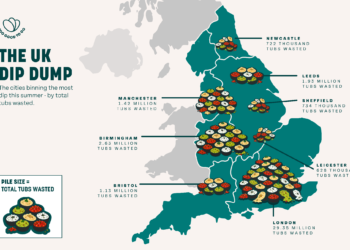
London, Birmingham and Leeds named the UK’s biggest dip waste capitals

August 21, 2026

As Britain gears up for the final Bank Holiday weekend of the summer - when...

Home-prepared food triples as younger shoppers build new convenience routines

August 21, 2026

Consumers are increasingly preparing food and drink at home for on-the-go occasions rather than making...

Three-quarters of B2B businesses are sacrificing long-term growth for short-term leads, Propolis reports

August 21, 2026

More than three-quarters (76%) of B2B businesses are prioritising short-term sales goals over long-term brand...

Retail sales volumes are estimated to have fallen by 0.5% in July 2026, ONS reports

August 21, 2026

Retail sales volumes are estimated to have fallen by 0.5% in July 2026, according to...

The post-summer financial squeeze: three in four households overspend on summer holidays, shrinking back-to-school budgets

August 20, 2026

A comprehensive survey of UK parents of school-aged children, commissioned by AliExpress, reveals that families across...

Tu at Sainsbury's

New research from Tu at Sainsbury’s reveals the juggle behind managing school uniform week-to-week

August 20, 2026

As families prepare for the return to school, new research from Tu’s Uniform Readiness Index...

Load More

Popular Posts

  • KitKat®KitKat® doubles down on Sharing Bars with two exciting new flavours (37)
  • Redevco’s Poole Retail ParkNew M&S Food opens at Redevco’s Poole Retail Park (69)
  • AsdaAsda brings back the Puffin biscuit nearly 30 years after its High Court battle (1,240)
  • Ritter Sport and HARIBORitter Sport and HARIBO launch their first-ever UK collaboration (248)
  • PlaymobilPlaymobil launches Barbie Dreamhouse Adventures range across Argos, Very and Hamleys (289)
  • WestfieldWestfield named the retail home of the British Fashion Council’s latest campaign (239)

FEATURED ARTICLES

The invisible shelf: why retailers and consumer packaged goods brands need to win the algorithm to win the customer

The invisible shelf: why retailers and consumer packaged goods brands need to win the algorithm to win the customer

August 12, 2026
Securing The Future of Retail

Securing the future of retail through seamless omnichannel integration

March 23, 2026
appealing to the new emotional economics of festive shopping

Smug-face and FOMO: appealing to the new emotional economics of festive shopping

October 27, 2025
nfu mutual nfu mutual
ADVERTISEMENT
ADVERTISEMENT

Find the Story You Need

No Result
View All Result
  • Home Page
  • Editorial – Contact
  • Advertising
  • Copyright
  • Privacy & Cookie Policy
  • Retailer News
  • Products
  • Data
  • Technology
  • Events
  • People
  • Comment
  • Sustainability
  • Awards
  • Research
No Result
View All Result
  • HOME
  • Featured Articles
  • Retail News Categories
  • About us
  • Advertising
  • Contact / Press release submit page
  • Privacy policy