A new survey has revealed that technical difficulties are among the most common work excuses for remote workers. Unexpected family events, sick family members, and other family emergencies come second. Other work obligations like attending a virtual meeting, or urgent tasks that require immediate attention are at the bottom of the list of excuses.
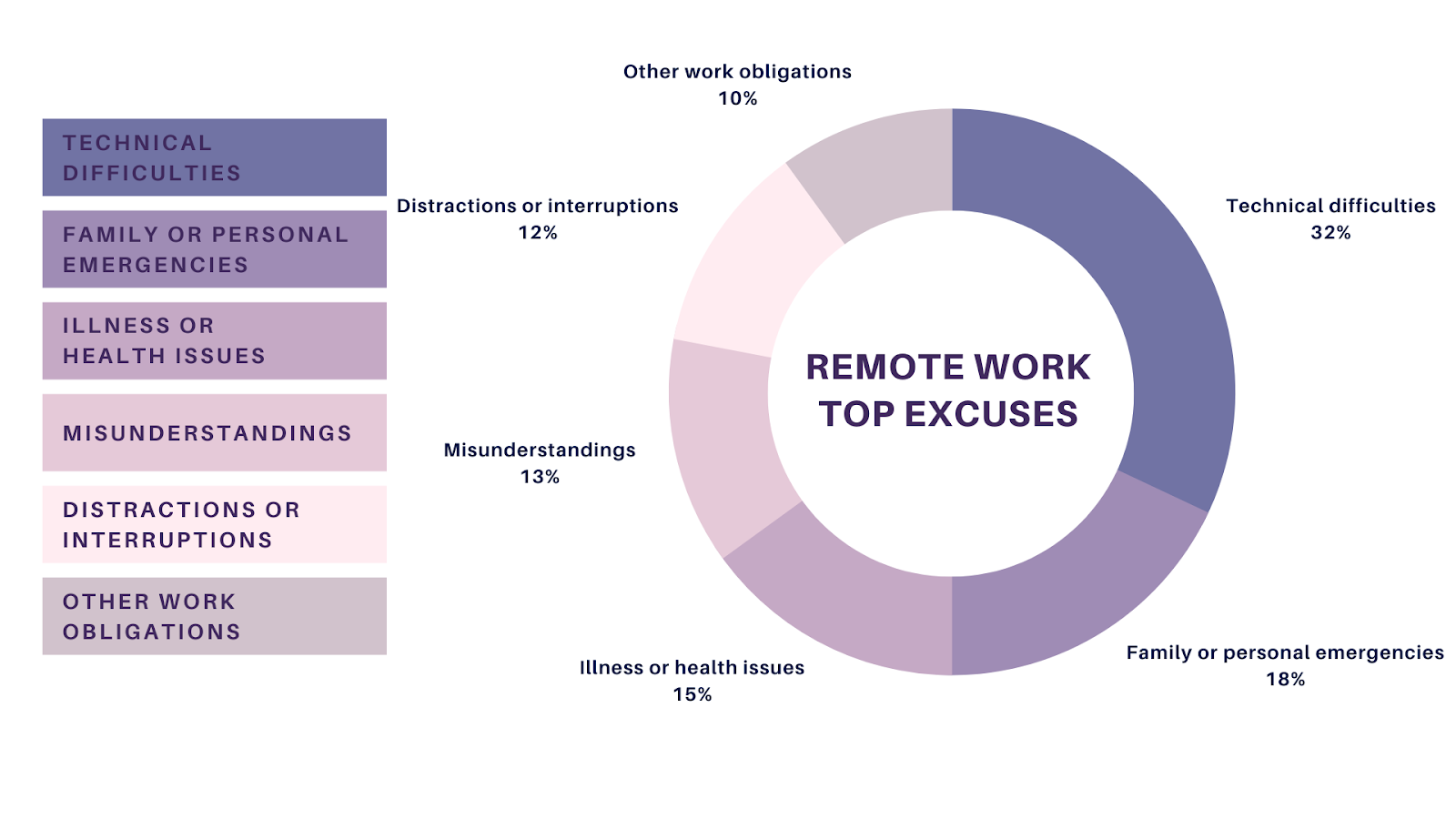
The survey, carried out by WorkYard, a game-changing workforce management system, asked around 1600 remote workers to name the most common excuse they use when working remotely. The respondents revealed that power outages and issues with internet connectivity are most frequently used by them, and overall other technical difficulties topped the list by 32%. The survey was carried out in mid-February and aimed to uncover more excuses all the remote workers use.
The survey revealed that technical difficulties can take on many forms, including problems with internet connectivity, computer hardware or software issues, power outages, and much more. Video and audio problems, and cybersecurity threats were mentioned as well. These kinds of difficulties were the top issue faced by 32% of respondents.
18% of the survey participants mentioned that they use excuses such as unexpected events regarding their family, sick family members that need to be taken care of and unexpected home repair issues such as plumbing. All in all, family or personal emergencies came second in our survey list.
The cold, flu and other health conditions preventing to work are not new to any of us. They still continue to be an excuse in our digital age with 15% of the respondents mentioning that they are their most “favorite” excuses. Illness or health issues also included excuses like chronic health condition that requires rest and pregnancy.
We may never have experienced things like scheduling conflicts with other meetings or appointments if we were always present at the office. Misunderstandings are also common among remote work excuses with 13% overall. People like to say things such as working across different time zones and experiencing confusion about time differences, confusion about the time or date of the call, etc.
We all remember the first days of all of us working remotely: kids crying in the background, pets jumping on laptops and family conversations, etc. Distractions or interruptions are still frequent excuses when working remotely, especially for those in big families, or for those whose neighbors are always in the house repair process. 12% of participants like to mention that they got interrupted and were unable to continue.
The survey revealed that the least favourite excuses remote employees like to give are Other work obligations with 10% and at the bottom of our list. Attending other virtual meeting, urgent tasks that require immediate attention were their most lovely responses.
Spokesperson at WorkYard, Nic De Bonis, said: “The insights from the survey emphasize the need for businesses to invest in effective remote work policies and processes. With a growing number of workers preferring to work remotely, companies that fail to adapt to this trend may lose out on top talent and be at a disadvantage in the competition for skilled labor. Furthermore, the lack of productivity resulting from remote work excuses may translate to lost revenues and decreased profitability. In this context, investing in the right technology and infrastructure, providing clear expectations, and regular communication can help to optimize remote work, improve employee engagement, and maximize productivity.”