
 When it comes to buying a piece of clothing online, what do e-consumers pay the most attention to? Of course, to know this, one would have to get inside the customer’s head. And this is exactly what UNGUESS (https://unguess.io/it/index.html), a crowdsourcing testing platform, has tried to do, asking its community to analyze seven UK clothing e-commerce.
How was the research carried out? UNGUESS asked UK testers of its TRYBER community, made up of over 40,000 real users, to search and buy one or more items of clothing, respecting a well-defined budget: “Winter is coming and you need to renew your wardrobe! Visit this website and buy as many sweaters as possible with a budget between £80 and £100.”
The first results obtained
“By comparing the rankings for the different usability metrics, we noticed that the extreme positionings, meaning negative and positive, involved the same retailers, showing a homogeneous distribution in terms of effectiveness, efficiency and perceived satisfaction. Extremely positive or extremely negative evaluations in terms of efficiency seem to have influenced the general perception of the tested product,” explains Laura Morabito, UX designer & researcher of UNGUESS.
But what did the UK users of the seven e-commerce particularly appreciate?
 A recognizable and linear design and the use of brightly coloured images, especially when representing the brand through the selection of products, have proven to be particularly relevant to the buyer.
The users’ response to the selection of seasonal products for winter was also very positive, alongside the search bar offering a direct shortcut to the product.
“The anticipation of user needs and the prioritization of contents are a decisive factor in terms of efficiency and satisfaction perceived by the user, who manages to reach his goal quickly and easily, with a reduced cognitive load,” continues Morabito.
Users hardly use the search bar, but look directly at the reference categories
It is interesting to observe that all the UK participants involved in the test showed the same search approach: regardless of the user interface of the individual websites, almost all users started their search directly from the categories, moving on to the search bar only later, when they didn’t find anything that piqued their interest.
The biggest stumbling block for the user, in this phase, concerned navigation within the categories and the complexity of the underlying taxonomy: too many first-level categories, in fact, create confusion, consequently slowing down navigation.
Yes to photos of worn clothes and no to badly communicated out-of-stock products
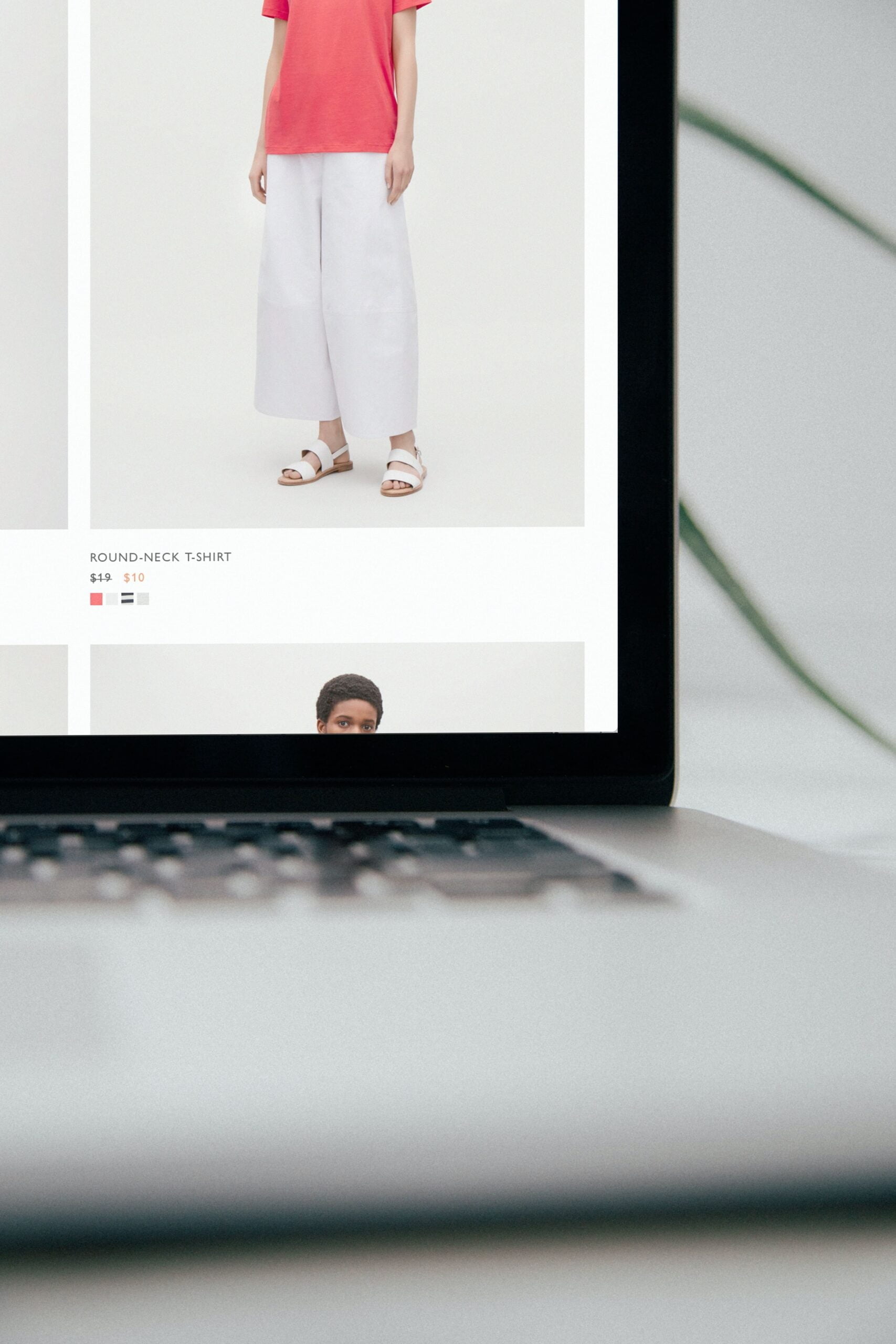 In the product consultation phase, the buyers appreciated the photos of clothes they wore, especially those that represent different models: this is given by the fact that the user’s recognition of the wearer positively influences the propensity to purchase.
Out of stock management is fundamental in this phase: many users have expressed frustration about consulting a product page and discovering – only later – that it was out of stock, even though it was still in the catalogue.
About the shopping cart: what do users not like at all?
Two other elements causing disagreement among users have been detected: being redirected to the shopping cart after selecting an item, without being able to continue directly with the purchases, and not being able to quickly delete a product from the shopping cart itself.
Finally, once the task was completed, it was reported – sometimes – the impossibility of concluding the purchase without necessarily having to register on the relative site.
“The ease of navigation and use of the site, the identification and reduction of friction encountered by the user and the graphic component are just some of the elements that contribute to the user experience in its entirety. Therefore, these reflections can be taken into consideration for every context and more generally by all those who want to implement the sales capacity of their e-commerce,” concludes Morabito.
To know more: https://content.unguess.io/the-uk-retail-challenge