Following today’s release of Harrods’ figures for the year ending 31 January 2026; Elliot Rickerby, apparel analyst at GlobalData, a leading intelligence and productivity platform, offers his view: “Harrods’ performance is steadying after years of controversy, and recent hurdles such as its 2025 cyberattack, with the luxury department store reporting total revenues increased 1.2% for FY2025/26. Notably, this stabilisation occurred during a challenging period for the UK economy, when consumers’ propensity to spend has dipped even among wealthier demographics. While the retailer has not returned to the 8% revenue growth experienced in FY2023/24, its turnover demonstrates brand resilience and consumer desirability amid both internal and external uncertainty. Profit before tax (PBT) climbed to £84.9m (up £119m on last year’s figure), an increase that appears exaggerated when compared to minor changes in other metrics. This is largely attributable to a reduction in exceptional costs. Expenses for the employee welfare redress scheme, which compensates victims of abuse by the former owner, dropped by £56.2m, and loan restructuring costs dropped by £19.7m. The absence of these expenses flatters PBT across FY2025/26.
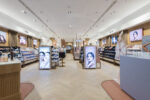
“Harrods continues to leverage its status as an established luxury shopping destination, a strong position in the current economic climate where wealthy consumers value premium face-to-face experiences and high-end hospitality. The retailer has doubled down on its Knightsbridge flagship, closing its experimental Shanghai store and scaling back regional H Beauty concepts. This consolidation coincides with the near-completion of flagship refurbishments, including the June 2026 launch of the “International Designer Room”, an ultra-exclusive upper-floor space hosting rare womenswear brands as the next phase of its ongoing womenswear overhaul. Although the flagship store’s physical refurbishments are impressive, Harrods’ true challenge lies in restoring the consumer trust eroded during recent controversies. As the luxury sector relies entirely on brand loyalty and repeat purchases, overhauling this credibility is essential if Harrods hopes to reclaim its legacy growth trajectory.”