
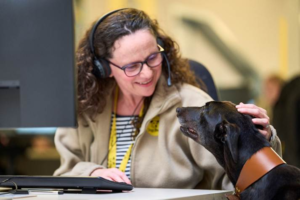
 The Pets Foundation, Pets at Home’s corporate foundation, is committing £1.2 million over three years to help fund Dogs Trust’s Behaviour Support Line, giving more dog owners access to free, expert advice when they are struggling with their dog’s behaviour.
Demand for behavioural support is growing, with Dogs Trust’s Behaviour Support Line having helped more than 35,000 dog owners since launching as a pilot in 2022. In the last year alone, 19,000 owners were supported, with over 40,000 calls completed. The team forecasts demand will continue to grow, with more than 20,000 dogs expected to be supported this year.
The £1.2 million investment reflects The Pets Foundation’s commitment to tackling the underlying causes that can lead to pets being given up. With behaviour-related issues accounting for over a third of dogs handed over to Dogs Trust, the funding will focus on early intervention, helping owners access trusted support before challenges escalate to the point where they feel unable to cope. Pets at Home stores, petcare advisors, and Vets for Pets practices will also help signpost owners to the Behaviour Support Line, making support easier to find.
The investment marks the next chapter in a 14-year relationship between Pets at Home and Dogs Trust, which has generated more than £6 million in value for the charity and supported over 100,000 dogs and their owners. Over the years, Pets at Home Group has supported Dogs Trust in a variety of ways, from providing food and essentials for dogs in its care to supporting veterinary care and local rehoming centres. The new funding builds on this relationship with a shared focus on helping more dogs stay in loving homes.
Behavioural challenges can place significant pressure on owners and their relationships with their dogs, making access to early, trusted support an important part of helping prevent problems from escalating.
Dogs Trust’s Behaviour Support Line provides free, expert advice to all dog owners, offering a supportive and non-judgemental place to turn when they need help. As demand has increased, the service has expanded its opening hours and grown from a pilot team of three to a specialist team of over 20, with nearly two thirds of all callers getting the support they need over the phone.
Amy Angus, Head of Charity Partnership and Communities at Pets at Home, said:
“We know just how much pets mean to the people who love them, but behavioural challenges can sometimes leave owners feeling overwhelmed.
“The Behaviour Support Line gives owners somewhere to turn when they’re struggling, before those challenges reach a point of crisis. We want people to know that asking for help is okay, that they won’t be judged, and that giving up a much-loved pet isn’t their only option.
“That’s why we’re investing significantly in the helpline. By making trusted, expert advice easier for owners to access, we hope to tackle one of the key reasons dogs are given up and help more pets stay where they belong, in loving homes.”
Maria Murray, Dogs Trust Behaviour and Community Services Director said:
“We’re incredibly grateful to The Pets Foundation for this significant investment and proud to be continuing a relationship with Pets at Home that has lasted more than a decade. What has always united us is a shared ambition to make life better for dogs and the people who love them.
“The real value of this funding will be felt long beyond an individual phone call. Giving an owner the right advice at the right time can change the course of a dog’s life, building understanding and confidence and, in some cases, helping a family stay together. With The Pets Foundation’s support, we’ll be able to make that difference for many more dogs and their owners.”
The Behaviour Support Line in action – Barney’s Story
The difference the right behavioural support can make can be seen in Barney’s story. Barney settled in well after moving into foster care, but his carers became concerned that he was resource guarding. This is a behaviour where a dog becomes protective of something they consider valuable, such as food, toys or other possessions. Barney could become protective around his food bowl, a favourite toy or even a shoe, particularly when the other dog in the home came close.
His foster carers managed the situation by feeding the dogs separately, toys were supervised, and situations that might cause conflict were avoided, but another incident occurred and they contacted Dogs Trust’s Behaviour Support Line for additional support.
After talking through Barney’s routine and behaviour, the team helped his carers understand the anxiety behind his resource guarding and suggested some simple changes. These included feeding Barney before his morning walk to reduce the anticipation around mealtimes, preventing him from entering the kitchen while food was being prepared, and giving him plenty of uninterrupted space while eating. They were also given practical guidance on managing resource guarding and relationships within a multi-dog household.
“Once we understood why Barney was behaving the way he was, it all started to make much more sense. We had a plan to follow and felt much more confident moving forward,” said his foster carer, James.
With the new routine and management in place, there were no further incidents, and Barney became calmer and more settled.
“The difference was huge,” said James, “We could all relax a bit more, and Barney seemed much happier too.”
After six weeks in foster care, he found a loving new home and was adopted in July 2026, where he has continued to thrive.
His story shows how understanding the reasons behind a dog’s behaviour, and getting support when you need it, can make all the difference. With a little patience, the right advice and plenty of love, Barney was able to put his best paw forward and start the next chapter of his life.