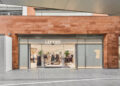
Macclesfield furniture retailer Arighi Bianchi has become the first retailer in the UK to offer The Rug Box by The Woven Edge – a new made-to-measure rug collection giving customers the freedom to choose bespoke sizes and shapes.
The collection allows customers to specify the dimensions and shape of their rug rather than being restricted to conventional off-the-shelf formats, with selected designs available up to 5m wide and to the length required.
The launch comes as shaped and bespoke rugs are emerging as an interiors trend, driven in part by the popularity of curved furniture, open-plan living and homes where standard rectangular rugs don’t always work.
“What’s exciting about this for us isn’t simply being able to offer a rug in a different size,” says Arighi Bianchi flooring and rug expert Steve Smith. “It’s the freedom it gives you to start with the room rather than the product.
“We spend a lot of time considering the proportions of sofas, dining tables, kitchen islands and other major pieces of furniture. It makes sense to give the same consideration to the rug that connects them.
“Instead of asking ‘which rug will fit?’, we’re encouraging people to ask a much more interesting question: ‘What rug does my room actually need?’”
The new rules of rug buying
For decades, buying a rug has largely meant choosing a colour and pattern, then picking from a handful of standard rectangular sizes. But our homes aren’t standard rectangles. They have bay windows, fireplaces, curved sofas, round dining tables, awkward corners and increasingly open-plan layouts where furniture, rather than walls, defines how we use a space.
So why do we still assume the rug underneath it all should be standard sizes or rectangular?
According to Steve, considering the shape of a rug – not simply its colour, pattern or size – can completely change how a room comes together.
“We’re so accustomed to seeing rectangular or round rugs that most of us don’t even consider whether that shape is actually right for the room,” he explains. “We choose from the sizes and shapes we’re presented with and then try to make them work.
“But turn that thinking around. Look at the architecture, the furniture and how you move through the room first. What shape does that arrangement naturally create? Your rug can then work with those lines rather than being an arbitrary rectangle placed underneath them.”
Curves have become increasingly prominent in interiors, appearing in everything from sofas and armchairs to coffee tables, kitchen islands and architectural details.
Steve believes rugs are a natural place to continue those softer lines.
“If you’ve chosen a beautiful curved sofa and a rounded coffee table, putting a rigid rectangular rug underneath them can sometimes work against what you’re trying to achieve,” he explains.
“An organic shaped or oval and curved rug can echo the furniture and make the entire arrangement feel much more considered. Equally, if a room is dominated by straight architectural lines, introducing a softer rug shape can provide contrast and stop it feeling too rigid.
“Rectangular rugs are absolutely right for lots of spaces, especially if you follow the tried and tested rug rules about where to place a rug in relation to your furniture. The difference is choosing a rectangle because it works – rather than because that’s simply what rugs traditionally look like.”
Five times to think beyond a rectangular rug
You have curved furniture
Rather than ignoring the shape of a curved sofa or statement chair, consider a rug which responds to it.
“Look at the outline created by your furniture,” says Steve. “A curved or irregular rug can follow that arrangement and visually connect the individual pieces. It’s a subtle detail, but it’s the sort of thing that makes a room feel designed rather than simply furnished.”
You have a round or oval dining table
The rug underneath a dining table should relate to its shape as well as its dimensions.
“A circular rug beneath a round table, or an oval rug under an oval table, reinforces that shape and creates a really strong focal point,” says Steve. “Just remember to measure for the chairs when they’re pulled out, not tucked underneath the table. You want the chairs to remain comfortably on the rug when somebody is sitting down.”
You’re trying to zone an open-plan space
In an open-plan room, the walls no longer dictate where one area finishes and another begins – which makes rugs an incredibly useful design tool.
“Think of a rug as creating an invisible boundary,” Steve explains. “It can establish the footprint of the living area without needing a wall or physical divider. And that footprint doesn’t automatically need to be rectangular. Look at how the sofa, chairs, side tables and other furniture are actually positioned and consider a rug that brings that particular grouping together.”
Your room has awkward architecture
Bay windows, alcoves, angled walls and unusual room footprints can all make standard rugs difficult to position.
“This is where I’d stop asking ‘which standard rug size will fit?’ and start asking ‘what does this room actually need?’”says Steve. “An unusual space doesn’t necessarily require you to compromise. Being able to change the proportions or shape of the rug means you can respond to the architecture rather than fighting against it.”
You want the rug to be the design feature
An unconventional rug can also be used simply because it looks interesting. Steve says: “We talk a lot about statement lighting, statement chairs and statement artwork, but a rug occupies a huge amount of visual space in a room. There’s no reason it can’t be the statement piece.
“An unexpected outline, such as a hexagon or organic freeform shape, instantly makes you notice it. In a relatively simple room, an irregular rug can provide the design interest without needing lots of additional furniture or accessories.”
Shape isn’t the only consideration. Steve says another common mistake is measuring the available patch of floor rather than considering how the rug relates to the furniture sitting around it.
“The most common mistake when it comes to selecting rugs for a room, particularly a living room, is that rug is probably too small. Almost every interior designer will say the same. A little ‘postage stamp’ rug floating in the middle of the room is one of the most common styling mistakes, especially in relation to your sofa”, he says.
“In a living room, I generally want the rug to connect the main pieces of furniture. That might mean having at least the front legs of the sofa and chairs sitting on it, or, in a larger room, putting the entire furniture grouping onto the rug.
“And don’t automatically assume that a small room needs a small rug. A larger rug can actually make a room feel more generous because it creates one cohesive area rather than visually chopping the floor into lots of smaller sections.
“In a bedroom, the three main ways to position a bedroom rug are a large rug underneath the bed extending beyond both sides and the foot; a rug positioned under the lower two-thirds of the bed so you don’t waste expensive rug underneath bedside tables; or smaller/individual rugs or runners alongside the bed.”
Before committing to a shape or size, Steve recommends one very low-tech interiors trick.
“Get a roll of masking tape and physically mark the proposed rug onto your floor,” he says. “Don’t just create a standard rectangle. Experiment. Follow the curve of the sofa, try a circle underneath the dining table or tape out a more organic outline and see how it changes the space.
“Then put the furniture where it will actually sit and walk around it. Look at it from the doorway too. You’re testing not only whether the rug fits, but whether the proportions and shape make sense when you move through the room.”