Deliveroo welcomed its retail and restaurant partners at a new Food Forward event in London this week to discuss the future of food and hospitality and showcase its latest tech.
Deliveroo CEO and founder Will Shu said Food Forward was intended to show its partners how Deliveroo is helping them. The event attracted 350 partners from the UK, France and Italy with representation from small neighbourhood restaurants, QSRs, casual dining chains, small and large grocery retailers including the leading UK supermarkets plus Esselunga in Italy and Carrefour in France.
“We are bringing our partners together to look at what the future of food could look like,” said Shu.
As well as featuring presentations from the Deliveroo leadership team, the event hosted industry experts, including Lai Wah Co, Deputy Agent for Greater London at the Bank of England, who gave partners insight and guidance on current economic forecasts, consumer trends and behaviours, as well as the impact of AI on the industry. There were also a series of breakout sessions spanning topics such as packaging and marketing.
Rob Harris, Deliveroo’s vice president commercial, UK and Ireland, revealed the latest technological developments in on-demand grocery, which was first launched with the Co-op prior to the Covid pandemic.
According to Harris, the company is developing new picking technology and solutions for amended orders for both grocery retailers and its own dark sites.
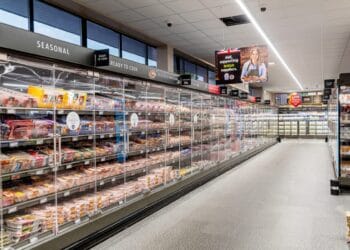
Retail partners are currently trialling Deliveroo Hop, a rapid grocery delivery service, with picking-only areas in-store to ensure a speedier service. Asda Tottenham Hale, for example, has a dedicated picking space at the back of the store where a team of Asda colleagues prepares orders.
Deliveroo is also extending its grocery partnerships. As well as working with leading supermarkets, including Waitorse and Morrisons plus symbol groups, the company has just launched the first Amazon Fresh store on its platform and plans to roll out to the rest of the Amazon Fresh estate, Harris said.
In terms of popular grocery categories, Harris said grocery ordering had now ‘normalised’ to regular shopping missions and weekly shops versus just being a service for forgotten items or ‘beers, booze and fags’, as it had at the outset.
However, younger customers and those living in more urban areas, don’t tend to do large, weekly shops because they have smaller living spaces and fridges, Shu said. For this group, Deliveroo has become a viable alternative to the large, next day delivery service that was the only available option four years ago.
Overall customer participation with Deliveroo is weighted towards the 25-34-year-old age group and lower among the over 55s. “It’s the more tech savvy customers who are using it, which is similar to the e-commerce category,” Shu said.